
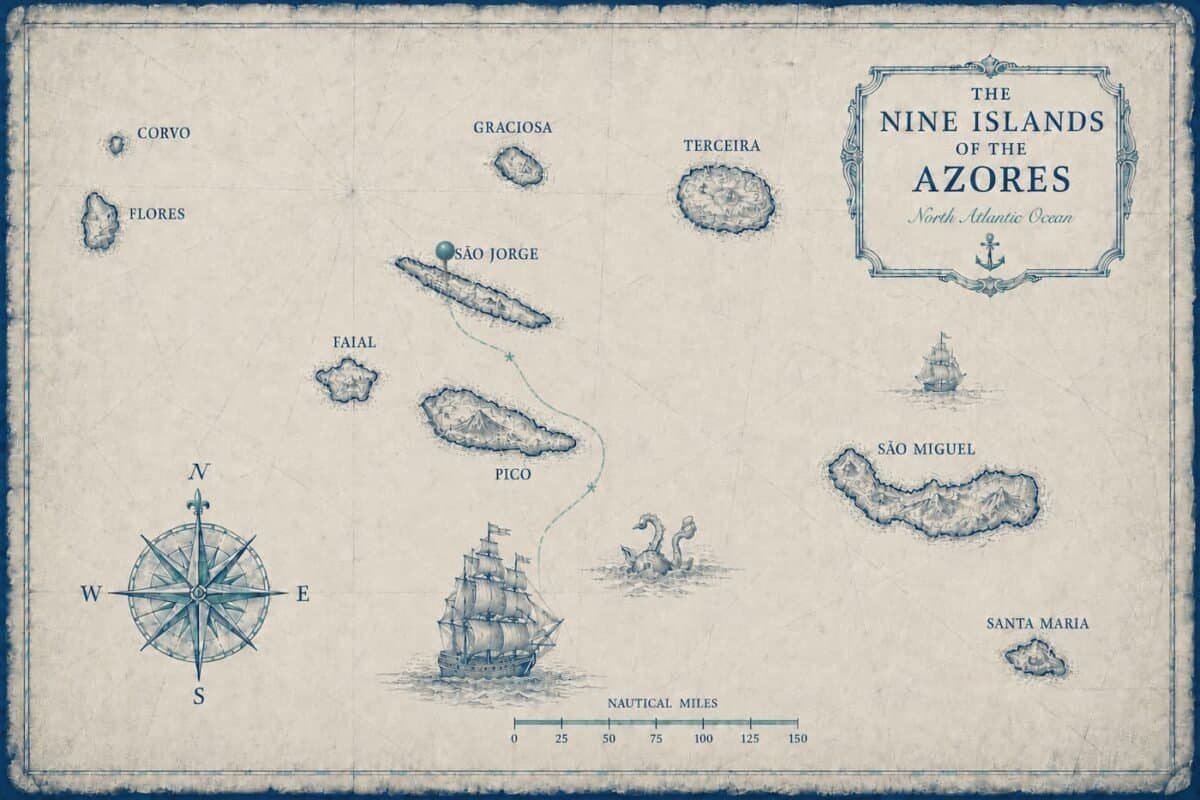
São Jorge: The Dragon Island
Shaped like a reclining dragon, São Jorge is known for its steep cliffs, fertile pastures, and coastal fajãs — flat lands formed by lava flows and landslides at the base of towering escarpments.
Home to around 8,000 residents, São Jorge is one of the Central Group’s Triangle Islands, which also include Pico and Faial. But it feels quieter and more rural than its larger neighbors.
Generations of farmers have made use of the island’s rich volcanic soils to support a thriving dairy industry. Today, São Jorge is famous throughout Portugal for its slightly spicy cheese, one of the archipelago’s best-known culinary traditions.
For visitors, São Jorge offers some of the most thrilling adventures in the Azores. Hiking trails and rapelling routes traverse lush forests, descend to remote fajãs, and reveal sweeping views across the sea of neighboring Pico and Faial. Both residents and travelers appreciate the island’s combination of unique scenery, strong local traditions, and slower pace of life.
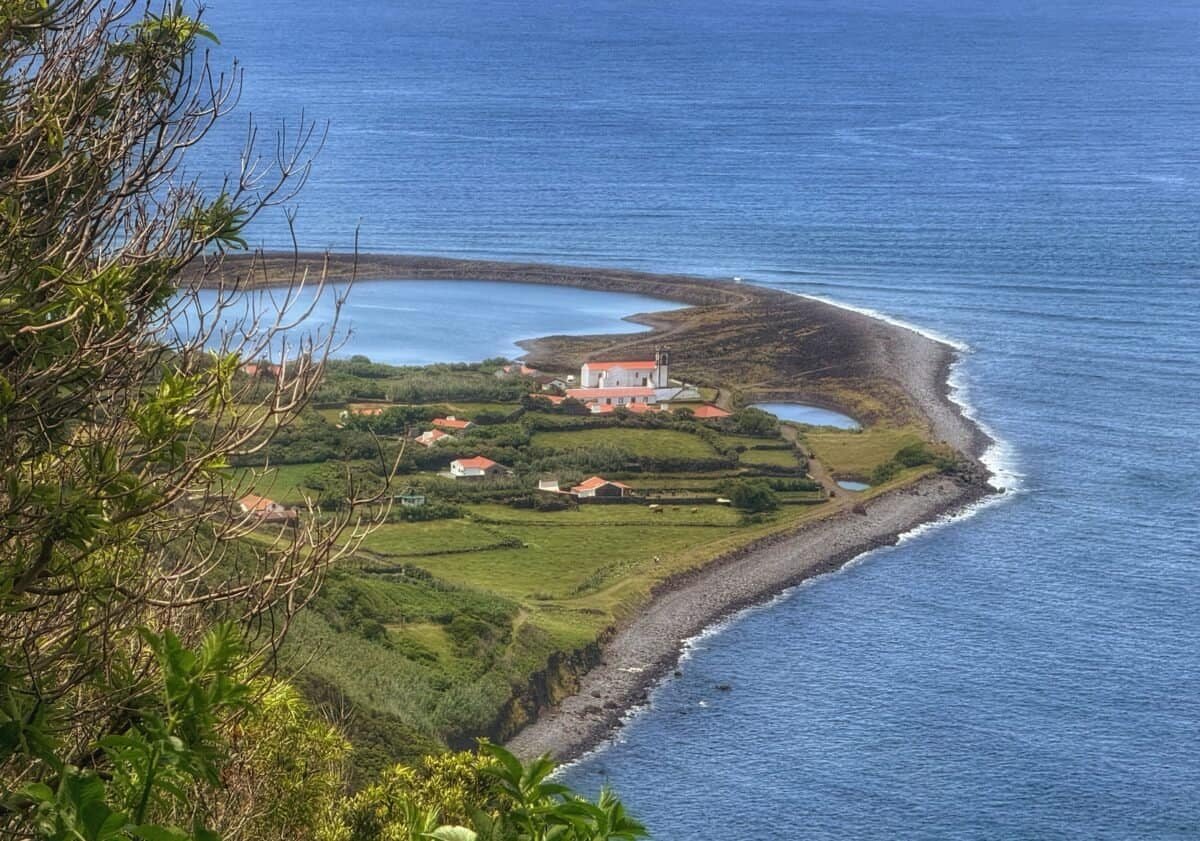
If São Jorge has a postcard image, it’s probably Fajã da Caldeira de Santo Cristo, a settlement so remote it’s reachable by trail only. Here, one finds a picturesque village, surreal lagoon, world-class waves, and unique clam beds found nowhere else in the Azores.
São Jorge at a Glance
Location
Central Group / Grupo Central
Size
95 mi² /
246 km²
Population
Around 8,500 permanent residents
Main Towns
Velas, Calheta
Landscapes
Steep cliffs dropping into coastal fajãs
Experiences
Hiking, adventure sports, surfing, culinary experiences
Frequently Asked Questions
1. Is it worth it to visit São Jorge?
This is an ideal island for foodies, surfers, adventure seekers, and slow travelers. Its location in the middle group of islands means it’s an easy trip via ferry from Pico or Faial.
2. What’s the best way to get to São Jorge?
Like all other islands, São Jorge has an airport. It doesn’t receive direct flights from North America or mainland Portugal, so a stopover on another island is required. It’s also reachable by year-round Atlanticoline ferries from the other Triangle Islands: Pico and Faial. In summertime, a ferry also runs between São Jorge, Graciosa, and Terceira.
3. Should I rent a car on São Jorge?
Only rent a car on São Jorge if you feel comfortable driving on steep, narrow, winding roads! Otherwise, a local taxi driver or tour guide will be happy to take you around the island.
4. What are the top things to do on São Jorge?
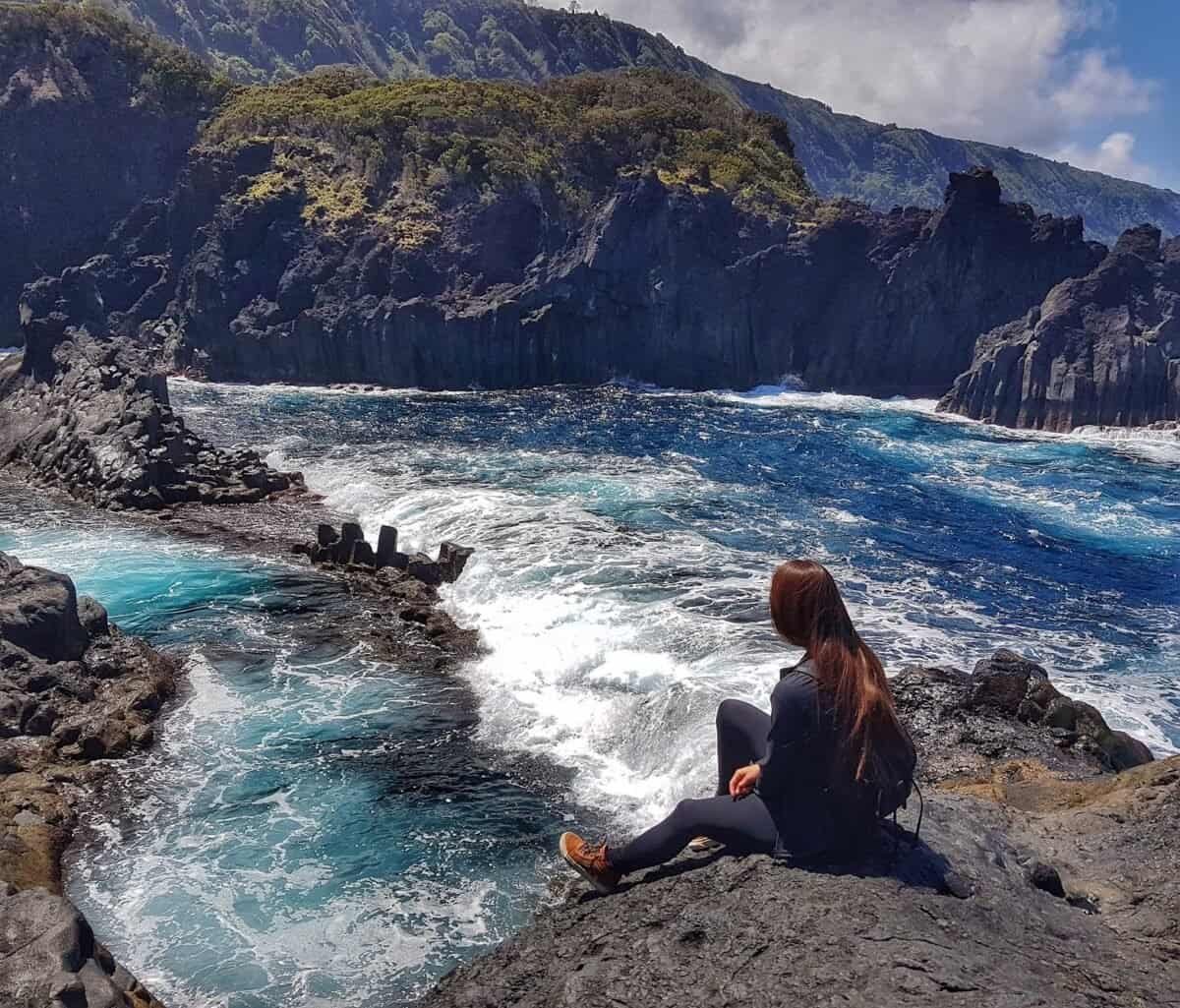
For a smaller island, São Jorge offers an impressive array of experiences. Active travelers can enjoy spectacular hikes, swims in natural pools, and canyoning adventures, in which you rappel down waterfall-soaked cliffs. Unique culinary experiences include sampling local cheeses and learning how they’re produced , visiting one of Europe’s only coffee plantations at Fajã dos Vimes, and indulging in the famous local clams.
5. Tell me more about Fajã da Caldeira do Santo Cristo.
There are two ways to get to this remote village: by trail along the coast or via a longer hike down through forested mountains from the center of the island. Day hikes are popular here, but some visitors elect to stay for a few days or longer to experience one of the quietest and most remote spots in the archipelago. Accommodations are available at a few vacation homes in town as well as at the Kuanza Resort in the nearby Fajã do Belo.
6. How many days should I spend on São Jorge?
Consider a 1-night, 2-day stay for an overview of the island. For a slow travel experience, extend to three days or more.
7. What’s the best time to visit São Jorge?
Regardless of when you visit, be prepared for rapidly changing weather conditions.Visit from July through early October for the best weather for outdoor adventures. Springtime can be lovely but can also be very rainy, and fog this time of year can disrupt flights or even lead to cancellations. Occasionally stormy seas from October through April can make ferry trips from Faial and Pico unpleasant, especially for those prone to sea sickness. Those seeking serious solitude, however, may relish an off-season visit to this remote and wild island.
Anchor in the Islands
Get the latest stories and updates