
Azores Transportation Guide: How to Travel to and Around the 9 Islands
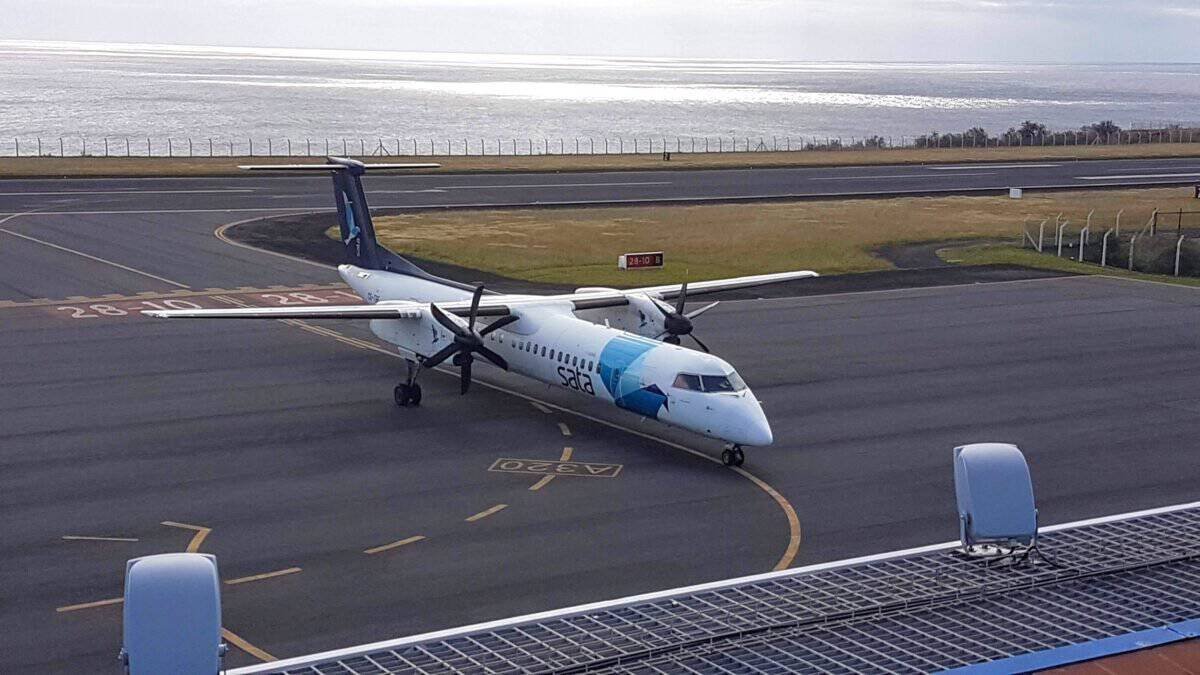
Many people contact us with questions about traveling to and between the islands. We hope that our Azores Transportation Guide can answer your questions and make your travel planning a bit easier.
One point matters above all: Transportation to and within the Azores requires advance planning. The archipelago stretches across roughly 370 miles (600 kilometers) of the North Atlantic, and its nine islands are divided into three widely separated geographical groups:
- The Eastern Group: São Miguel and Santa Maria
- The Central Group: Terceira, Graciosa, São Jorge, Pico, and Faial
- The Western Group: Flores and Corvo
A second point matters almost as much: You can plan all you want, and then the North Atlantic weather does its thing!

Flights may be delayed, diverted, or canceled when low clouds, fog, strong winds, or other adverse conditions make landing unsafe. Consider it the Atlantic gods testing your mettle! Build some flexibility into your itinerary and persist. It will all be worth it in the end.
Airlines Flying to the Azores
The SATA Group is the Azores’ principal airline operator. It operates under two different names:
- Azores Airlines connects the archipelago with mainland Portugal, Madeira, Europe, North America, and Cape Verde.
- SATA Air Açores operates flights among the nine Azorean islands.
TAP Air Portugal is another important carrier, particularly for travel between the Azores and mainland Portugal. It provides year-round service on major routes such as Lisbon–Ponta Delgada (São Miguel) and Lisbon–Terceira, as well as service to several smaller Azorean airports.
Other airlines currently offering seasonal nonstop flights to Ponta Delgada on São Miguel include:
- Air Canada
- Austrian Airlines
- Binter Canarias
- British Airways
- Edelweiss Air
- Eurowings
- Iberia
- Lufthansa
- Smartwings
- Transavia
- United Airlines
- WestJet
Airline schedules in the Azores change frequently, so always verify the schedule for your specific travel dates. Ryanair ended all service to the archipelago in March 2026. Other airlines’ routes operate for only a few months each year.
Flying into Ponta Delgada

João Paulo II Airport in Ponta Delgada, São Miguel (PDL), is the Azores’ busiest airport and receives the greatest number of flights from outside the archipelago.
Ponta Delgada has nonstop connections with the following cities in Portugal:
- Lisbon (LIS)
- Porto (OPO)
- Faro (FAO)
- Funchal, Madeira (FNC)
Lisbon offers the most frequent service. Azores Airlines and TAP Air Portugal both fly between Lisbon and Ponta Delgada, while Azores Airlines operates direct routes from Porto, Faro, and Funchal in the current schedule.
Ponta Delgada also receives nonstop flights from the following North American cities:
- Boston (BOS)
- New York–JFK (JFK)
- Newark (EWR)
- Toronto (YYZ)
- Montreal (YUL)
Azores Airlines serves Boston, New York, Toronto, and Montreal. United Airlines operates seasonal service from Newark, while Air Canada and WestJet offer seasonal service from Toronto.
During the 2026 summer season, Ponta Delgada also has nonstop flights from the following European cities outside Portugal:
- Amsterdam
- Barcelona
- Düsseldorf
- Frankfurt
- Las Palmas de Gran Canaria
- London
- Madrid
- Paris
- Prague
- Vienna
- Zurich
Ponta Delgada also receives year-round nonstop flights from Praia, Cape Verde (RAI), operated by Azores Airlines. This is currently the Azores’ only direct air connection with Africa.
Most of these routes are seasonal and may operate only once or twice per week. Current Ponta Delgada nonstop routes
Flying into Terceira
Lajes Airport on Terceira (TER) also receives flights from outside the archipelago, although considerably fewer than Ponta Delgada.
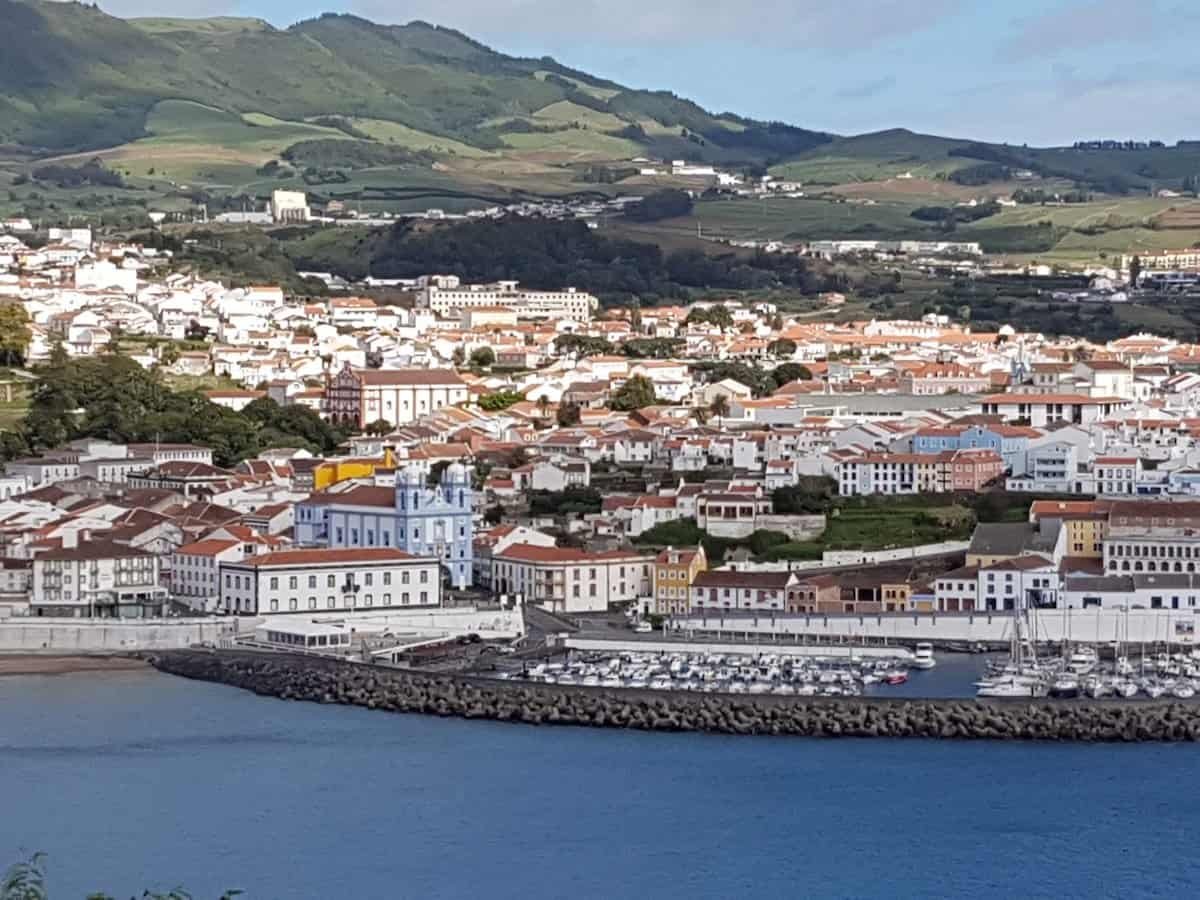
Terceira has nonstop connections with the following cities in Portugal:
- Lisbon
- Porto
- Funchal, Madeira
Azores Airlines and TAP Air Portugal operate flights from Lisbon and Porto. Azores Airlines introduced direct seasonal service between Terceira and Funchal for the 2026 summer season.
Terceira also receives seasonal nonstop flights from the following North American cities:
- Boston, operated by Azores Airlines
- Toronto, operated by Azores Airlines
- San Francisco, operated by TAP Air Portugal
Terceira’s direct European service outside Portugal is much more limited. Edelweiss Air currently operates a seasonal nonstop flight from Zurich, generally during a short summer window. Current Terceira nonstop routes
Flying Directly to Faial, Pico, and Santa Maria
Three other Azorean islands receive nonstop flights from Lisbon:
- Horta Airport (HOR) on Faial receives nonstop flights from Lisbon operated by Azores Airlines.
- Pico Airport (PIX) on Pico receives nonstop flights from Lisbon operated by Azores Airlines.
- Santa Maria Airport (SMA) on Santa Maria receives nonstop flights from Lisbon operated by TAP Air Portugal under the current schedule.
These routes operate less frequently than flights to Ponta Delgada and Terceira, but they can save travelers a lot of time, especially those who want to limit their visit to the Central Group.
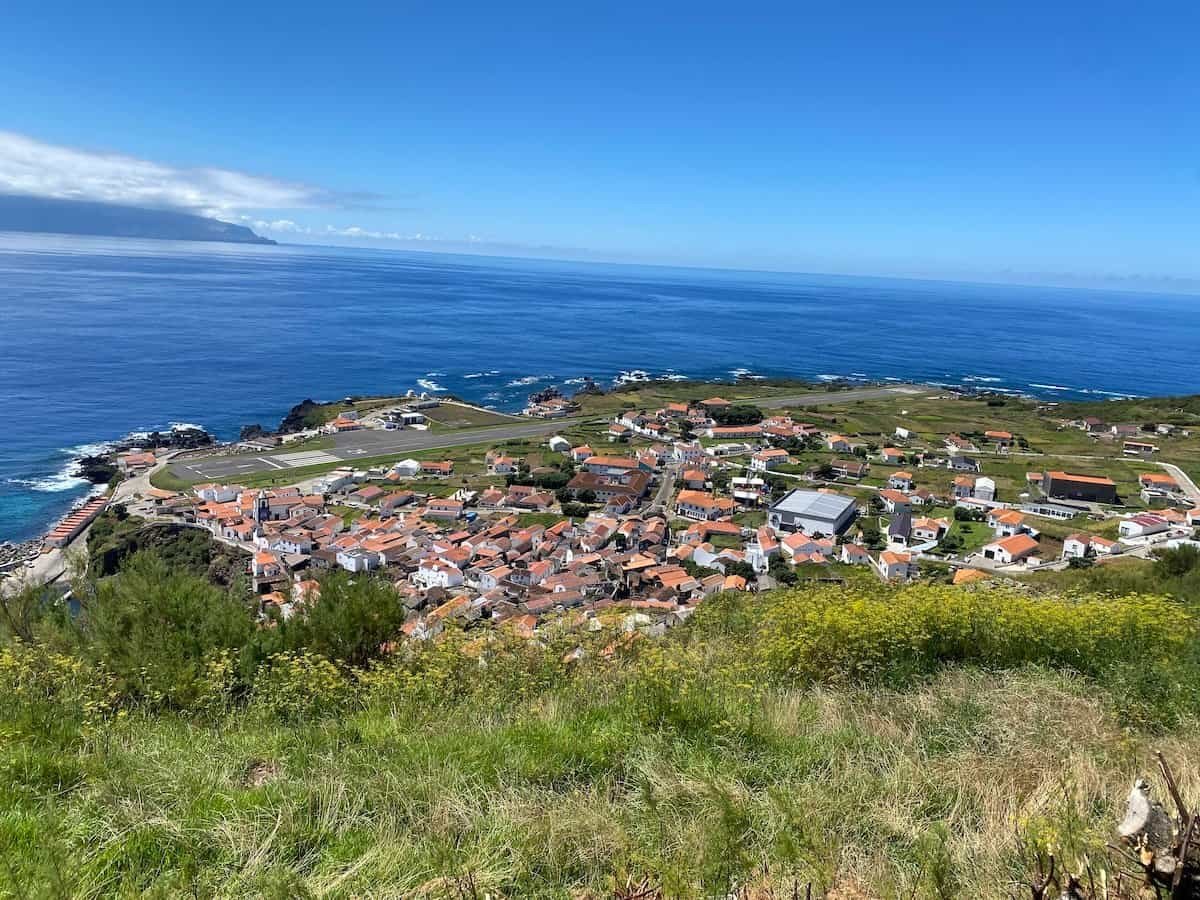
The other four islands — São Jorge, Graciosa, Flores, and Corvo — have airports but are reached exclusively by interisland flights operated by SATA Air Açores.
Seasonality
Air routes and frequencies vary enormously by season. Summer brings many more nonstop routes, more frequent flights, and greater capacity — one of the reasons why many people consider summer to be the best time to visit the Azores. However, keep in mind that routes described as “direct” or “nonstop” may operate only on certain days of the week, even in summer.
Schedules can also change from one year to the next. Treat the cities listed in this guide as an overview of the 2026 network rather than a permanent list of connections.
Planning Your Journey
Unless you’re traveling from a city with a nonstop connection to your chosen island — Boston to Ponta Delgada or Zurich to Terceira, for example — you will need at least one connection and possibly more.
The simplest option is to book your entire journey on a single ticket. However, if you’re traveling from North America, note that some booking platforms may route you through Lisbon even when shorter itineraries are available through Boston, New York, Newark, Toronto, or Montreal. Compare a few different search engines and route combinations before booking.
You can sometimes save money by purchasing a budget flight to a city with nonstop service to the Azores and then booking the Azores flight separately. For example, I have sometimes bought an inexpensive domestic flight to Boston and then a separate Azores Airlines ticket from Boston to Ponta Delgada. Similarly, those traveling from Europe may fly to Lisbon on a cheap ticket and book a separate Azores flight leaving from there.
This approach is risky, though. You will need to collect and recheck your luggage for the second flight, pass through security again, and possibly change terminals. If the first flight is late for some reason and you miss the second, the airline operating the onward flight has no obligation to rebook you free of charge.
If you do elect to book separate tickets, then, leave a generous buffer between flights. Better still, spend a night in the city from which your Azores flight departs.
Those visiting multiple islands can consider an open-jaw itinerary, meaning that they arrive on one island and depart from another. For example, you can fly from Lisbon to Faial, explore the Central Group, continue through to the Eastern Group, and eventually return to Lisbon from São Miguel. This can save time and prevent unnecessary backtracking.
Lastly, if you’re a resident of the Azores, you’re eligible for a discounted fare. Check the SATA Azores Airlines website for more details.
Interisland Ferries
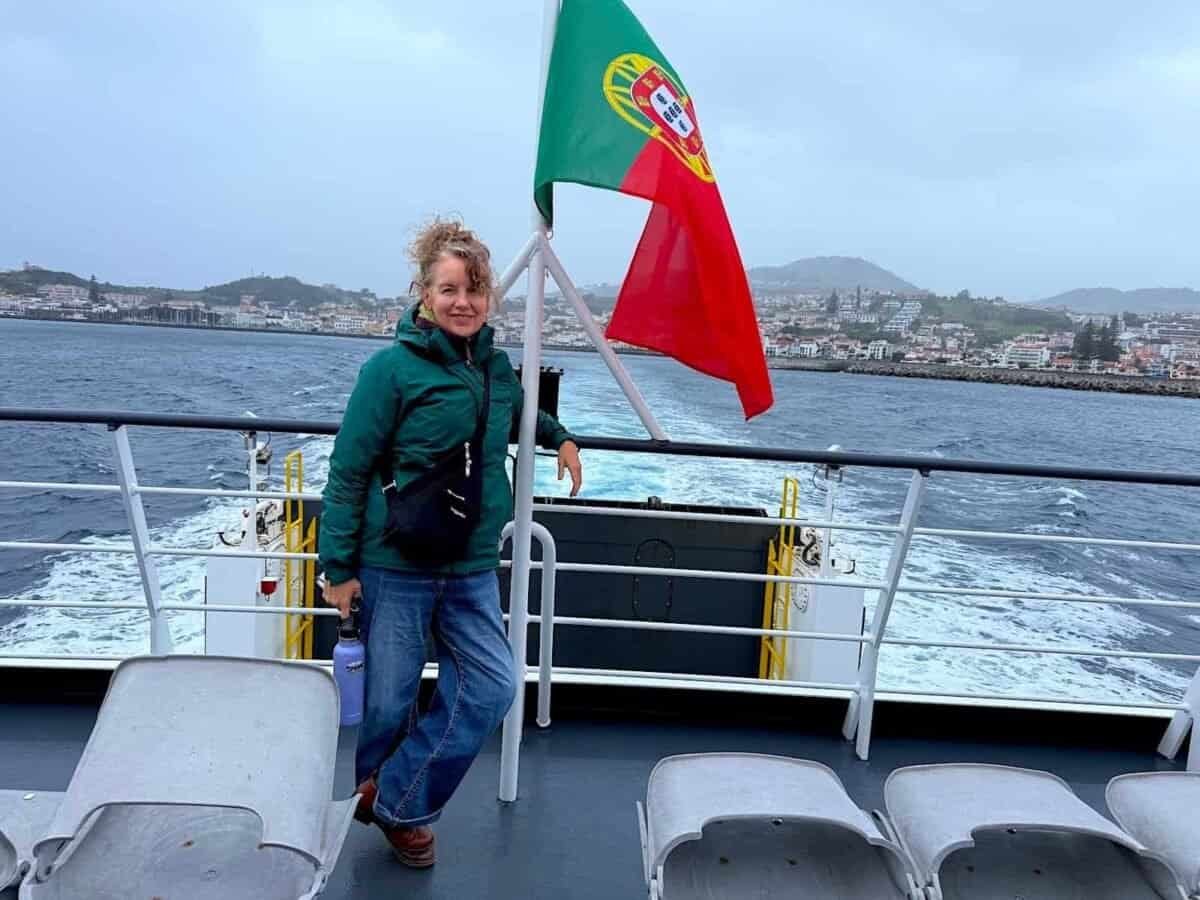
Atlânticoline operates the Azores’ interisland passenger ferries. These ferries are extremely useful within the Central and Western groups.
However, they’re not a universal substitute for flying for a few different reasons:
- São Miguel and Santa Maria currently have no scheduled passenger ferry service.
- There’s no ferry service connecting the archipelago’s three geographical groups.
- Ferry schedules change with the seasons.
- There are only three year-round ferries.
- The Pink Line (between Flores and Corvo in the Western Group)
- The Blue Line (between Faial and Madalena, Pico)
- The Green Line (between Faial, Madalena and São Roque on Pico, and São Jorge in the Central Group)
The Central Group
Ferry travel is the most developed among these five islands. Pico, São Jorge, and Terceira each have two ferry terminals; Pico has a terminal in Madalena and one on the north side in São Roque; São Jorge has one in Velas and one farther southeast along the coast in Calheta; and Terceira has one in the UNESCO city of Angra do Heroísmo on the south side of the island and one in Praia da Vitória on the east side. Faial and Graciosa each only have one terminal in Horta and Vila da Praia, respectively.
The 30-minute crossing between Horta, Faial and Madalena, Pico is the easiest and most frequently used ferry journey in the archipelago. Service operates between between Faial, Pico and also São Jorge (the Triangle Islands) throughout the year on the Blue and Green Lines. In summer, the Orange Line also connects São Roque on Pico with Velas on São Jorge.
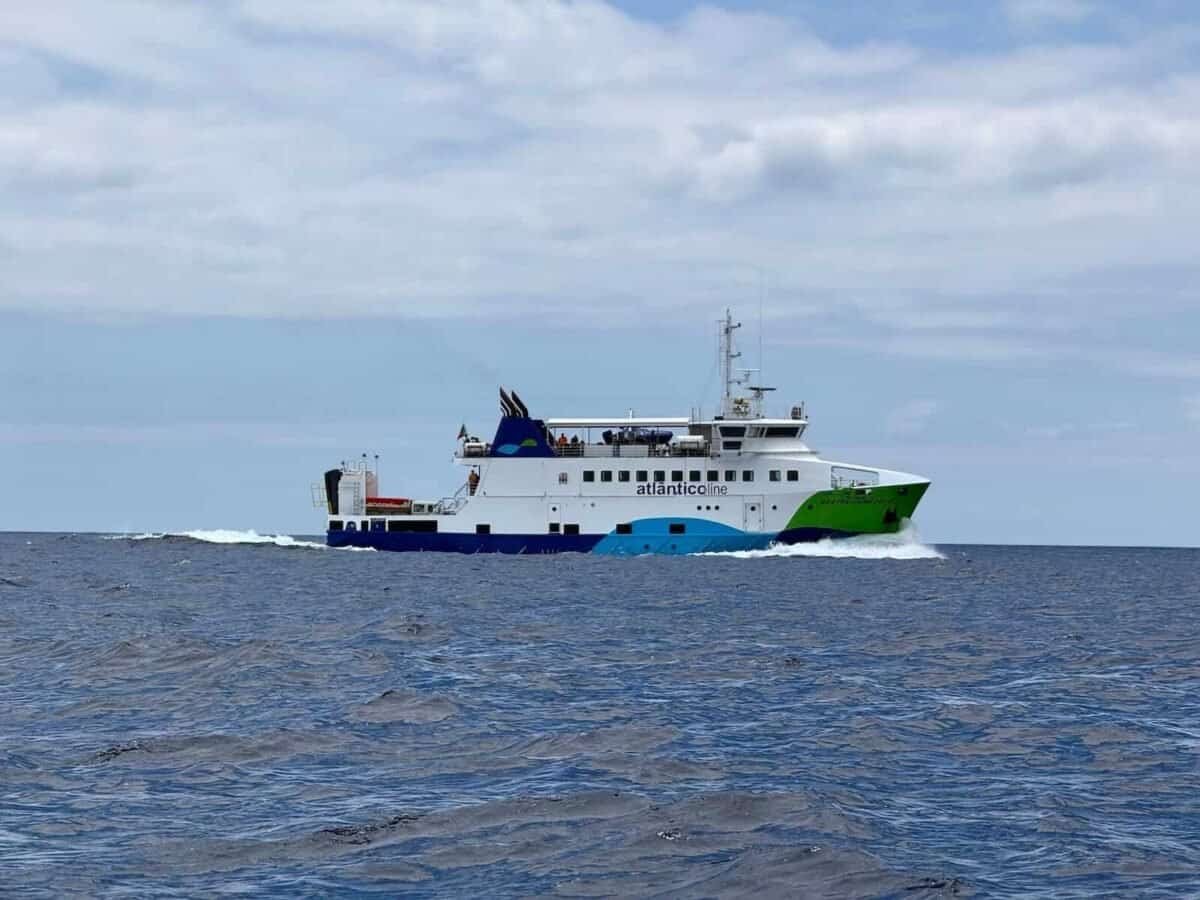
Connections between all five Central Group islands via the White Line and between Faial, Pico, São Jorge, and Terceira (the Central Group minus Graciosa) via the Purple Line involve longer journeys and are part of Atlânticoline’s seasonal network, which generally operates from June through September. Check Atlânticoline’s official timetable before building an itinerary around these routes.
The Western Group
Atlânticoline also operates a small passenger boat between Flores and Corvo (the Pink Line), although the schedule is limited and weather dependent.
Private companies also offer small-boat excursions between Flores and Corvo, particularly during the warmer months. Because these boats cross an exposed stretch of the North Atlantic, rough seas, wind, and poor visibility can delay these trips or result in them being canceled.
The Eastern Group
There is currently no scheduled passenger ferry service between São Miguel and Santa Maria. Travelers must fly between the two islands on SATA Air Açores.
There’s also no ferry connecting either Eastern Group island with the Central Group. It would be nice, but it’s not currently possible to travel through the entire archipelago by ferry.
Tips for Planning an Interisland Ferry Trip
- Reserve summer crossings in advance, particularly if you plan to take a vehicle. They do fill up!
- Not every ferry is a Ro-Pax ferry (one that can carry vehicles); some are passenger only. Plan accordingly.
- Never assume that a rental car can be taken to another island. Check with your rental company first!
- Rough seas can cause delays and cancellations and may make longer crossings uncomfortable.
- Avoid scheduling a ferry immediately before an inflexible flight. Leave a substantial buffer—and preferably an overnight stay—between the two.
- If you’re a resident of the Azores, you are eligible for discounted fare. Check the Atlanticoline website for more details.
Check Atlânticoline’s website and official timetable for more information.
Getting Around Each Island
For many travelers, renting a car provides the most flexibility and independence, as the main attractions are scattered across the islands. Public buses do run on all islands (except Corvo), but services and routes are limited. However, keep in mind that driving on some islands (e.g., Flores and especially São Jorge) requires navigating steep terrain and hairpin turns. If you’re uncomfortable with this, consider hiring a taxi driver for a half- or full-day island tour.
Rental Car Tips
- Reserve well ahead for summer travel.
- Automatic vehicles are scarcer and usually more expensive than manuals.
- A compact car is useful on narrow roads, but make sure it has sufficient power for steep terrain and enough room for your passengers and luggage.
- Confirm whether the company allows the car to be carried on a ferry.
Taxis and Private Transfers
Taxis are available on every island except Corvo, the smallest island, although van service can be arranged between town and the caldeirão. Otherwise, it’s possible to walk everywhere in Corvo’s only town, Vila do Corvo. On other small islands like Graciosa, taxis operate but may not always be waiting for you at the airport or ferry terminal, so it’s best to book ahead. Ask your accommodation provider to provide a contact or arrange a ride for you.
Public Buses
Public buses exist on all islands except Corvo, but they’re intended for residents and are not easy to figure out. Service may be infrequent, especially in rural areas, on weekends and holidays, and outside the school year.
Timetables are published by different operators rather than through one archipelago-wide system, and services can change seasonally. Consult the relevant operator before planning your day: São Miguel Bus, MobiAzores for Terceira, Farias for Faial, and Cristiano Limitada for Pico. For the other islands, ask the local tourism office or your accommodation provider for the latest schedule.
Tours
Guided tours can be an excellent alternative for travelers who don’t want to drive. They’re great for reaching remote attractions without having to worry about steep terrain, navigation, parking, or rapidly changing weather.
More Adventurous Ways to Get Around
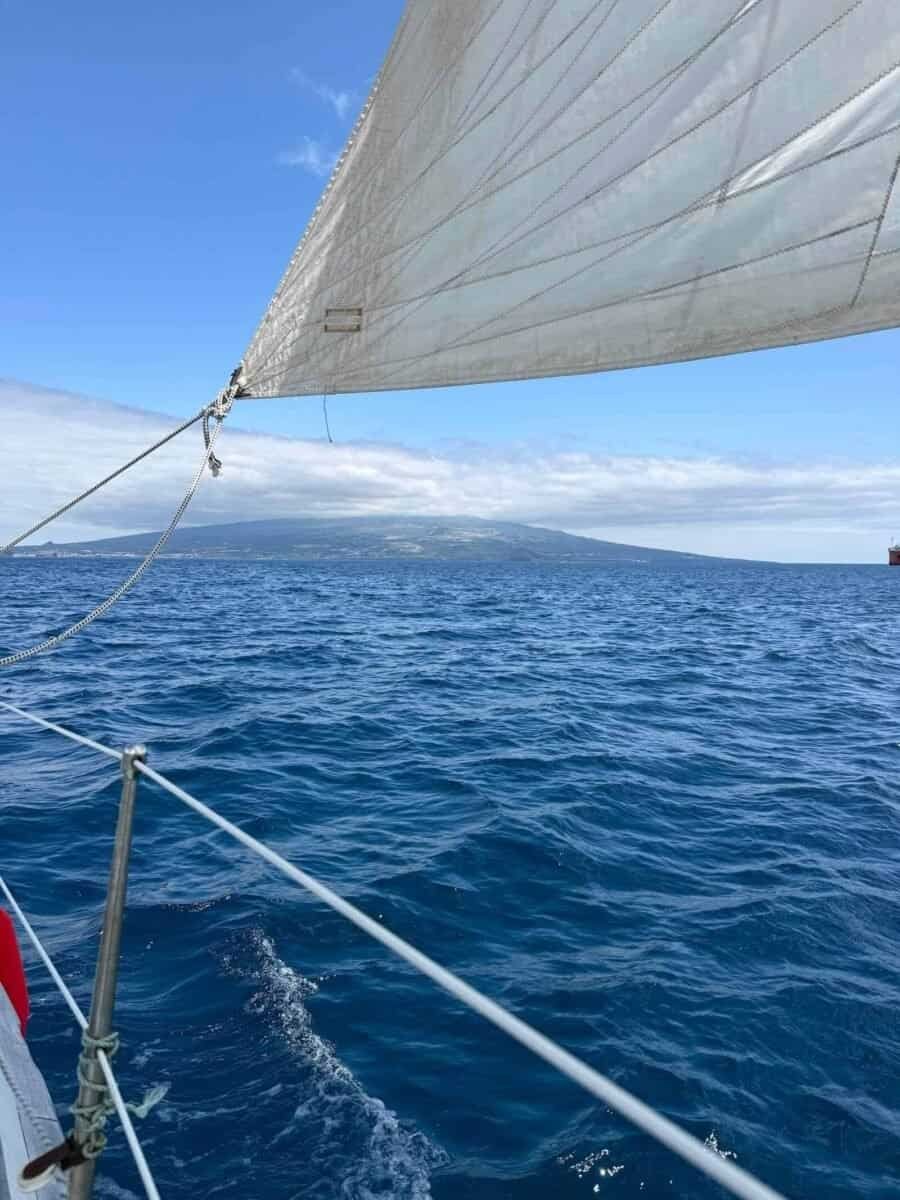
For travelers who want a little more adventure on their trip to the Azores, here are a few alternatives to commercial flights, ferries, and rental cars.
Visit on a Cruise
Some transatlantic cruises stop in the Azores while traveling between Europe and North America. Ponta Delgada on São Miguel receives the greatest number of cruise ships, although some itineraries include Horta and Praia da Vitória. A cruise will give you a quick introduction to the islands, but port calls are usually brief. Visitors may have only enough time for a tour of one part of the island before returning to the ship.
Sail into the Azores
Arriving by sailboat may be the most romantic way to reach the archipelago, and many sailors do it every year. The Marina da Horta on Faial is one of the Atlantic’s most celebrated sailing ports and a traditional stopping point for boats crossing between Europe, the Caribbean, and North America.
But the North Atlantic is no pleasure cruise. Long-distance sailing here requires substantial experience, careful preparation, and a properly equipped vessel. Travelers without that expertise should join an experienced crew rather than attempt the crossing independently.
Interisland Sailing and Small Boat Trips
If crossing the North Atlantic by sailboat sounds a little too adventurous, you can arrange a crewed sailing excursion after arriving in the islands. Depending on availability and weather conditions, operators may offer day trips or multi-day charters between islands.
Shorter boat excursions are more widely available. Depending on the island, these may include whale watching, coastal sightseeing, sea caves, waterfalls, islets, and other offshore geological formations. Always use a licensed operator and remember that routes and departures depend on sea conditions.
Travel on Foot or by Bicycle
Walking allows travelers to experience the islands at a slower and more intimate pace. It works well in Ponta Delgada (São Miguel), Angra do Heroísmo (Terceira), Horta (Faial), Madalena (Pico), and other compact towns.
Hiking opens up the islands’ coastal, volcanic, and rural landscapes. All nine islands offer rewarding day hikes. Multi-day treks can also be arranged on some islands, while experienced hikers can climb Mount Pico, the highest point in Portugal, which is on Pico Island.

Cycling is another adventurous way to explore, but the distances in the islands can be deceptive. Steep climbs, narrow roads, strong winds, sudden rain, and limited shoulders can make a route much harder than it appears on a map.
Concluding Thoughts
The Azores reward travelers who plan carefully and then lightly hold those plans. A delayed flight, a canceled ferry, or an unexpected overnight stay may feel frustrating in the moment. But slowing down is part of experiencing these wild islands. So make a plan. Make a backup plan. And then enjoy the ride!